
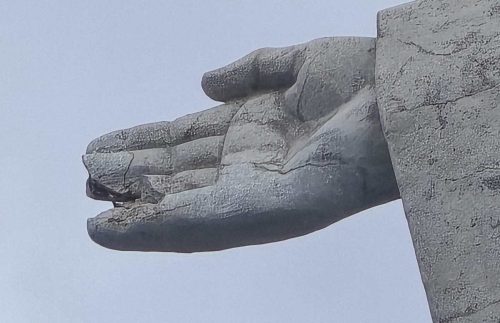
Today we were in Garajau to check on site the condition of the Christ the King monument, the oldest of its kind in the world. The Madeirans are proud to say: “We are the first and the best in this and that.”
For example, they claim that the longest tunnel in Portugal is in Madeira, that we used to have the biggest movie theater here, the best desalination plant, that the João Gomes bridge has the biggest span in Portugal, that the best player in the world is CR7, that it was from Madeira that sugarcane was shipped to Brazil and Hawaii, that it was the braguinha that gave rise to the ukulele, etc., etc.
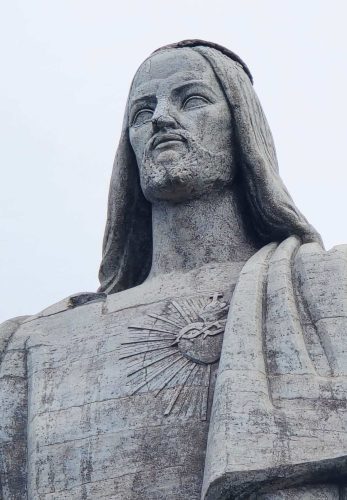
But they forget that the Christ the King monument in Garajau is the oldest in the world, inaugurated on April 16, 1927, the year Pope Benedict XVI was born. It is 14 meters high, including the pedestal and the statue. Christ the Redeemer in Rio de Janeiro, at 38 meters, dates back to 1931, and the one in Almada, at 28 meters, was inaugurated in 1959.
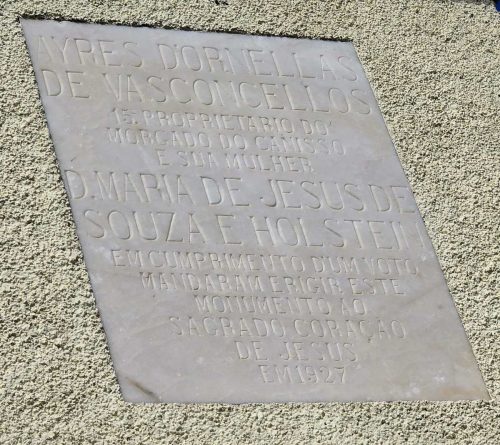
It was erected in 1927, at his own expense, on land belonging to his Morgadio do Caniço, located in Ponta do Garajau, by Councilor Aires de Ornelas, in fulfillment of a promise. He was born in Camacha on March 5, 1866. He died in Lisbon on December 14, 1930, and his body was transferred to the Misericórdia or Nossa Senhora das Angústias cemetery in 1934, which was located in the area of present-day Quinta Vigia. It was transferred again between 1939 and 1944 to São Martinho.
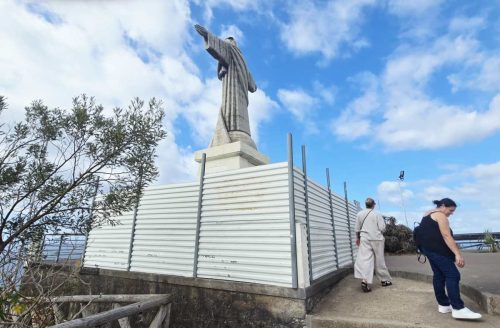
But our visit to Christ the King allowed us to take a photographic survey of the monument’s current condition. It has been “imprisoned” by a fence for over a year, as if it were a leper. Those afflicted with this terrible disease were once forced to live apart from society.
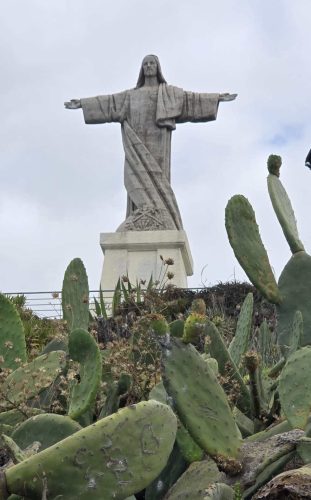
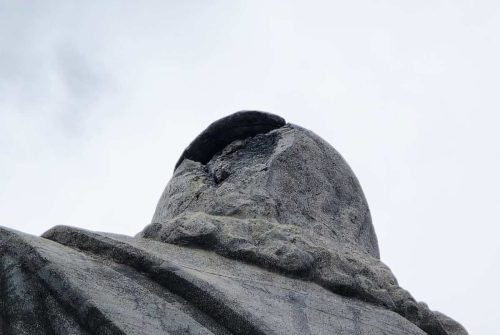
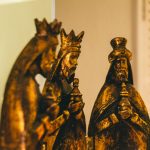
Christ the King is “imprisoned” to prevent visitors from being hit by the disintegrating materials of the sculpture by French sculptor Georges Serraz.
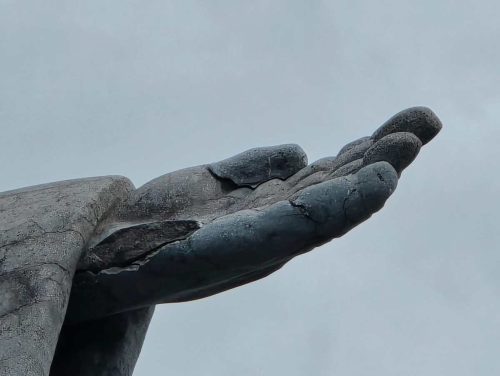
The hands and head are decomposing. The tombstones surrounding the pedestal are rusting. This is how this statue is presented to the hundreds of tourists who visit this site: a cloistered monument, without any explanation.
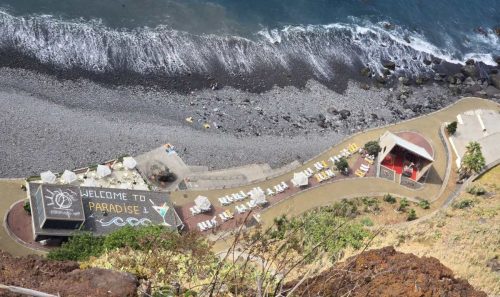
Garajau is a pleasant place, with a cable car, a beach, a café-snack bar, restrooms, and a parking lot, and the surrounding area is clean. But its hallmark, its hallmark, is Christ the King, which is “sick,” like an “impure” statue that’s falling apart, as if it were leprosy. Today, it’s treatable, but in this case, there’s no solution in sight.

Personally I am not religious but, I think it is a great shame that this statue has been left to deteriorate in this way.
Maurice, where did this story originate?
Here–
https://funchalnoticias.net/2025/08/27/escultura-do-cristo-rei-do-garajau-esta-doente-e-enclausurada/
The statue suffered a couple of lightning strikes a couple of years ago which caused damage.
This is often the case in Madeira: infrastructure and buildings are constructed with EU funds, opened with great fanfare – and then there is a lack of expertise, funds and even the will to maintain and preserve these achievements.
What a shame!
Anita, I tend to agree with you but you missed this bit.
It was erected in 1927, at his own expense, on land belonging to his Morgadio do Caniço, located in Ponta do Garajau, by Councilor Aires de Ornelas, in fulfillment of a promise. He was born in Camacha on March 5, 1866. He died in Lisbon on December 14, 1930, and his body was transferred to the Misericórdia or Nossa Senhora das Angústias cemetery in 1934, which was located in the area of present-day Quinta Vigia. It was transferred again between 1939 and 1944 to São Martinho.
There is always a solution where there is a will to resolve.
With modern materials today it should be no problem to repair and make the surface none porous. It is the material which needs sealing to prevent expansion and cracking. Why they can’t do the job correctly last time beggars belief. What does Mr OBE recommend???
Mr OBE recommends a full survey to determin what its current state is, then a realistic evaluation of what can be done to stop further damage as a holding position.
The survey needs to include a full specification for the remedial work, but here’s the buggy, usually when undertaking such projects, remedial work,costs more than total replacement.
Financially not for feint hearted.
However this is iconic and should be addressed so my last suggestion is
Set up a charity raise money to do the work, then charge to visit it so it’s ongoing needs for maintenance work are met.
My invoice is in the post ! Madeirian style post means it won’t arrive !!
I strongly agree, Mr. OBE.
I’ve requested from someone in Camara the spec that it was built with, then I’ll use some contacts to find a specialist company in the renovation world and see if they would do a survey, specification and some sort of budget cost for repairing this iconic sculpture. At least get some action on it.
Well this didn’t take long.
My contact as already responded with a full spec on what it’s make up is, base is reinforced concrete with an outer skin of limestone.
So what does that tell me.
It tells me, sal in the air/ rain as penitrated and reached the reinforcing, that as rusted and expanded blowing off the top layers of concrete and limestone.
To fix that requires to remove the outer layers, treat the reinforcing and replace the outer layers ie ” new statue”
However another twist in the tale, it’s privately owned and the owner won’t repair it or allow anyone else to repair it, in fact he sued ( and won) a case against the camara some time back when they intervened and upgraded the approach path.
Unfortunately I believe due to what I set out at the start of this, any idea of compulsory purchase would now be futile.
As we say, ” WHAT A MESS”
What a shame . It seems so odd that the owner is determined to allow it to degrade and eventually be ruined.
When I align to base here, I’m talking the inner core of the statue not it’s plinth
For anyone interested
Doing such a sculpture today, you would not use steel reinforcing, there are better materials particularly so close to the ocean where salt in the air gets onto the sculpture via rain and penitrates and affects the rebar ( reinforcement) things like fibreglass strands can be used ( and other materials that are unaffected by water and salt)
We use fibreglass strands these days in reinforced concrete floors, looks most peculiar as the fibres stick up like whiskers and have to be machined off after floor sets.
Well apparently CM Santa Cruz did try many times to repair the Christ the King statue in Garajau but because it is in private land the owner isn’t allowing anyone access the land or even doing any repairs .And in 2012 was affected by lightning and most recently in 2025 strong winds did take a portion of the sleeve falling off consequently leading to a process of damage and degradation and closed to the public for safe reasons
https://www.facebook.com/photo.php?fbid=1063532695816432&id=100064791335932&set=a.323301773172865
https://www.facebook.com/groups/ocorrencias.madeira/posts/8879376015524078/
https://www.cmjornal.pt/cmtv/videos/detalhe/relampago-destroi-estatua-do-cristo-rei-na-madeira
https://www.ruigoncalvessilva.com/madeira/cristo-rei-da-madeira-monumento-pioneiro
There may well be a case of ” dummy throw out” involved, and this is just a guess,
Owner approaches Camara for asistance to fund works, camara says, your statue, your problem, owner says, fine I can’t afford it, but I’ll just leave it,be. When it reaches a point of no return and there is a lot of negative media chaneled towards Camara, and now very expensive to repair ( if it can be repaired)
Canara then asks owner to join them in now spending a great deal of money,far beyond initial cost, damage done to the relationship and owners are willing to let it literally collapse
Just wild thoughts from a fertile mind
When rebar ( reinforcing) goes rusty, it’s surface area increases by between 6 and 10 times the original volume, it can literally lift brickwork and concrete,hence major brickwork cracking in walls particularly at top edges of windows and doors when metal lintles go rusty.